
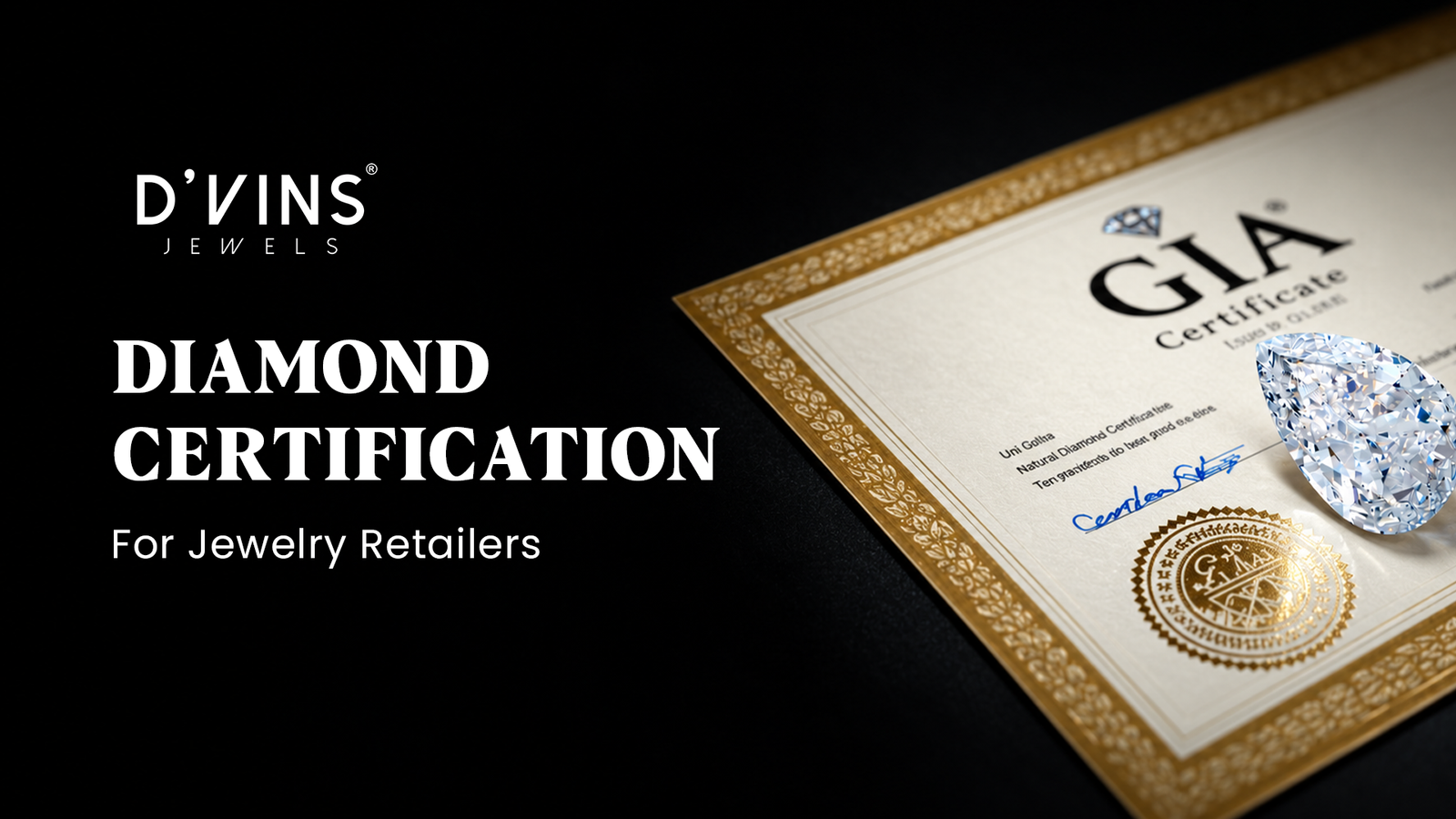
A diamond report can look perfect and still describe a different stone.
For jewelry retailers, wholesalers and brands, that single gap can cost a sale, a customer or a reputation. Certification is meant to remove doubt, but only when you know what the document actually says, who issued it and how to check it against the diamond in your hand. We manufacture natural and lab-grown diamond jewelry for trade buyers in more than 15 countries, and certification questions come up in almost every new partnership. This guide answers them from a manufacturer’s side of the table: what a report proves, what it does not, and what to check before you place your next order.
What Diamond Certification Really Means
“Diamond certification” is the term the trade uses, but most gemological laboratories call the document a diamond grading report. It records what the laboratory found when it examined a specific stone: its identity, measurements and quality characteristics.
A typical report covers carat weight, measurements, color, clarity and finish. Depending on the laboratory and the service, it may also include fluorescence, a cut grade, a clarity plot, laser inscription details, the growth method for lab-grown stones and any detected treatments. Two things a report does not do: it does not guarantee resale value, and it does not describe the jewelry the diamond is set in. It documents one stone, on the day it was examined, according to that laboratory’s standards.
Grading Report vs Certificate: Who Issued It Matters Most
The title on the paper matters far less than the organization behind it. A report from an independent laboratory and a “certificate” printed by a seller are very different documents, even when they look alike.
| Factor | Independent Laboratory Report | Seller or In-House Certificate |
|---|---|---|
| Issued by | An independent gemological laboratory | The seller, manufacturer or a related party |
| Independence | No financial interest in the sale | The issuer benefits from the sale |
| Online verification | Report number can be checked on the laboratory’s website | Usually not verifiable by a third party |
| Grading standards | Published and consistent across stones | Varies from issuer to issuer |
| Best used for | Individual center stones and higher-value diamonds | Supporting details on small stones, alongside other checks |
A simple rule: if you cannot verify a document with the organization that issued it, treat it as a sales description, not as certification.
The 4Cs, Through a Buyer's Eyes
No single grade tells you how a diamond will look in a finished piece or how it will sell. Here is how each of the 4Cs affects your buying decisions.
Cut
Cut covers proportions, symmetry and polish, which together decide how much light the diamond returns. It has the biggest effect on sparkle. GIA gives an overall cut grade for standard round brilliants, while fancy shapes are judged on polish, symmetry and proportions. For your customers, a well-cut stone with a slightly lower color grade often looks better than a poorly cut stone with a higher one.
Color
Color is graded on a scale from D (colorless) downward. A one-grade difference can change the price noticeably while being hard to see once the diamond is set. Match the color grade to the metal: yellow and rose gold settings can carry a warmer stone, while white gold and platinum show color more clearly.
Clarity
Clarity grades the size, number, type and position of inclusions and blemishes. Two stones with the same grade can look different, because an inclusion under the table is more visible than one near the girdle. For most retail jewelry, the commercial question is simple: is the stone eye-clean at normal viewing distance?
Carat Weight
Carat measures weight, not size. Two 1-carat diamonds can face up at different diameters because of their proportions. Always compare measurements in millimeters, not carat weight alone, especially when you are matching stones for pairs or sets.
The Laboratories You Will See Most
Laboratories do not use identical terminology, formats or standards, so comparing grades across labs is not always like-for-like.
| Laboratory | What Retailers Should Know |
|---|---|
| GIA (Gemological Institute of America) | The most widely recognized name for natural diamonds. Gives an overall cut grade for standard round brilliants. Since October 2025, GIA no longer grades lab-grown diamonds on the 4Cs scale; qualifying colorless to near-colorless lab-grown stones receive a “Premium” or “Standard” descriptor instead. |
| IGI (International Gemological Institute) | Grades both natural and lab-grown diamonds and is widely used in the lab-grown market. Also issues reports for finished jewelry, which helps when you sell mounted pieces. |
| HRD Antwerp | A Belgian laboratory recognized in European markets, grading both natural and lab-grown diamonds. |
Natural vs Lab-Grown: What the Report Must Say
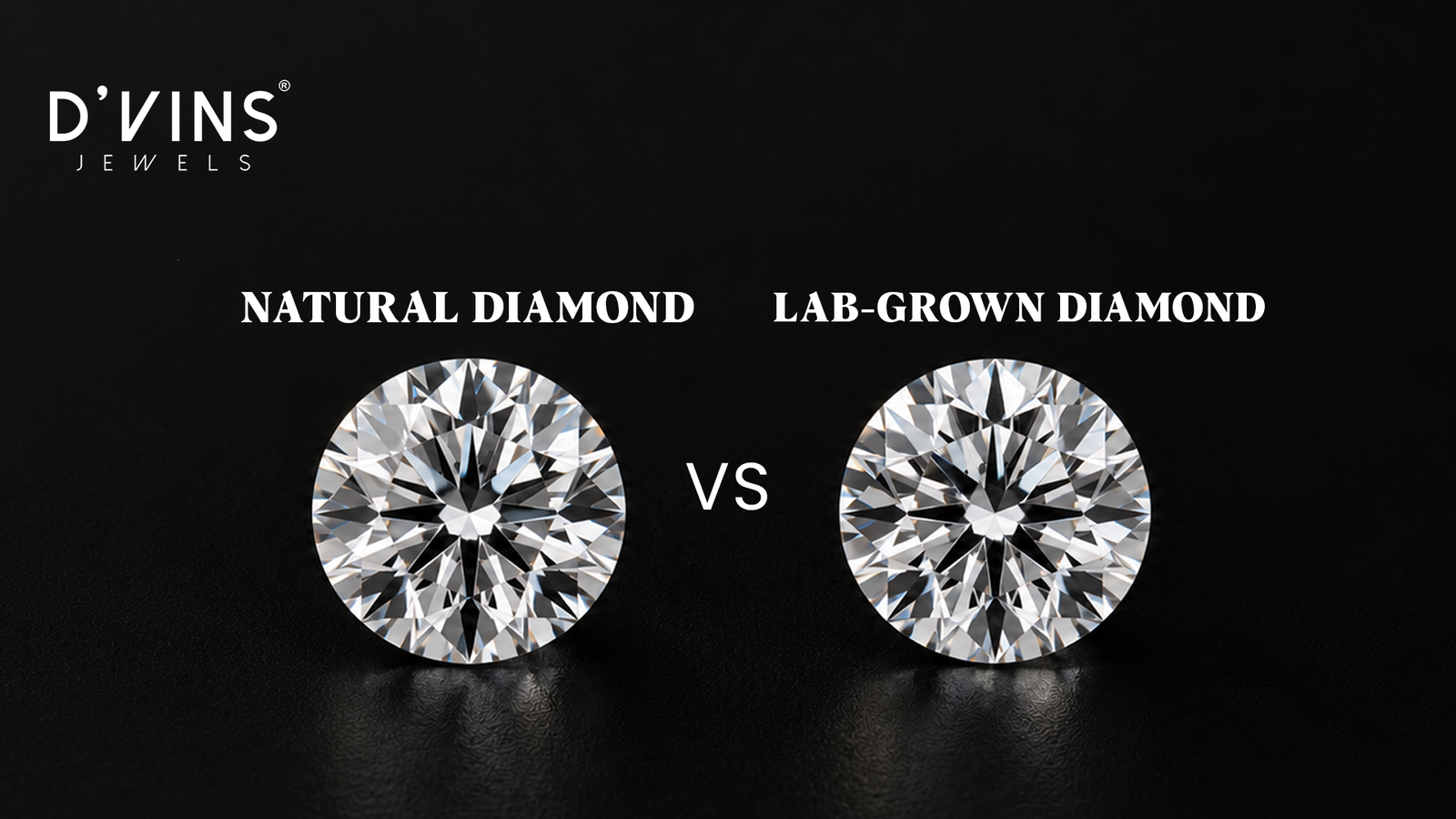
Natural and lab-grown diamonds share the same physical and optical properties, so they cannot be told apart by eye. That is why the origin statement on a report is the single most important line for your business.
- A natural diamond report should clearly state that the stone is natural.
- A lab-grown diamond report should clearly state laboratory-grown origin and, where the laboratory provides it, the growth method (CVD or HPHT) and any post-growth treatment.
- Most leading laboratories laser-inscribe lab-grown stones with their origin and report number, which gives you a physical link between paper and stone.
Disclosure must stay consistent beyond the report. Your product titles, invoices, tags and website listings should name the diamond type the same way. In the United States, for example, the FTC Jewelry Guides require lab-grown diamonds to be clearly described with terms such as “laboratory-grown” or “laboratory-created”.
The Diamonds Without Reports: Small Stones and Melee
Most diamonds in a piece of jewelry are small accent stones, often called melee. Individual reports for these stones are rarely practical, because the cost of grading can exceed the value of the stone. This is where the real risk sits for natural diamond buyers. Undisclosed lab-grown melee mixed into natural parcels is one of the biggest concerns in the trade today, and a center-stone report says nothing about the accent stones around it.
For stones without individual reports, ask your manufacturer:
- Where the melee is sourced, and whether natural and lab-grown parcels are handled separately.
- How natural melee is screened for lab-grown or treated stones before setting.
- Whether the invoice states the diamond type and total diamond weight for each piece.
- Whether a finished jewelry report is available for the complete piece when your market expects one.
How to Read a Diamond Grading Report
When a report arrives with your order, check these fields first:
| Field | Why It Matters |
|---|---|
| Report number and date | Your key to online verification and record-keeping |
| Origin (natural or lab-grown) | Decides how the stone must be described and priced |
| Shape and measurements | Connects the paper to the physical stone and shows its real face-up size |
| Carat weight | Should match your order specification exactly |
| Color and clarity grades | Confirm the quality you agreed to buy |
| Cut, polish and symmetry | Indicate light performance and finish quality |
| Fluorescence | Can affect appearance and, for natural stones, price |
| Inscription and comments | Laser inscription, treatments and additional observations |
How to Verify Diamond Certification in Four Steps
A professional-looking document is not proof. Use this process for every reported stone:
- Verify online. Enter the report number on the issuing laboratory’s official website, such as GIA Report Check or IGI report verification.
- Compare the details. Match carat weight, measurements, color, and clarity on the online record with the paper report.
- Check the inscription. Where the stone is inscribed, view it under magnification and confirm it matches the report number.
- Confirm the origin. Make sure the report identifies the stone as natural or laboratory-grown, matching what you ordered and were invoiced for.
Remember: a genuine report number does not prove that the stone in front of you is the stone described. The measurements and inscription are what connect the two.
Choosing the Right Laboratory for Your Market
The “best” laboratory is the one your customers recognize and trust. Before you specify reports for a collection, consider:
- Your end customer’s expectations. Buyers of natural diamonds often ask for GIA, while IGI is widely accepted in lab-grown retail.
- Stone value. Reports add cost per stone, so they make the most sense for center stones and higher-value diamonds where the paperwork supports the selling price.
- Production timelines. Sending stones for grading adds time before setting. Plan this into your delivery dates.
- How you will sell. If you sell online, a verifiable report number on the product page builds trust faster than any product description.
Certification Is Not Quality Control
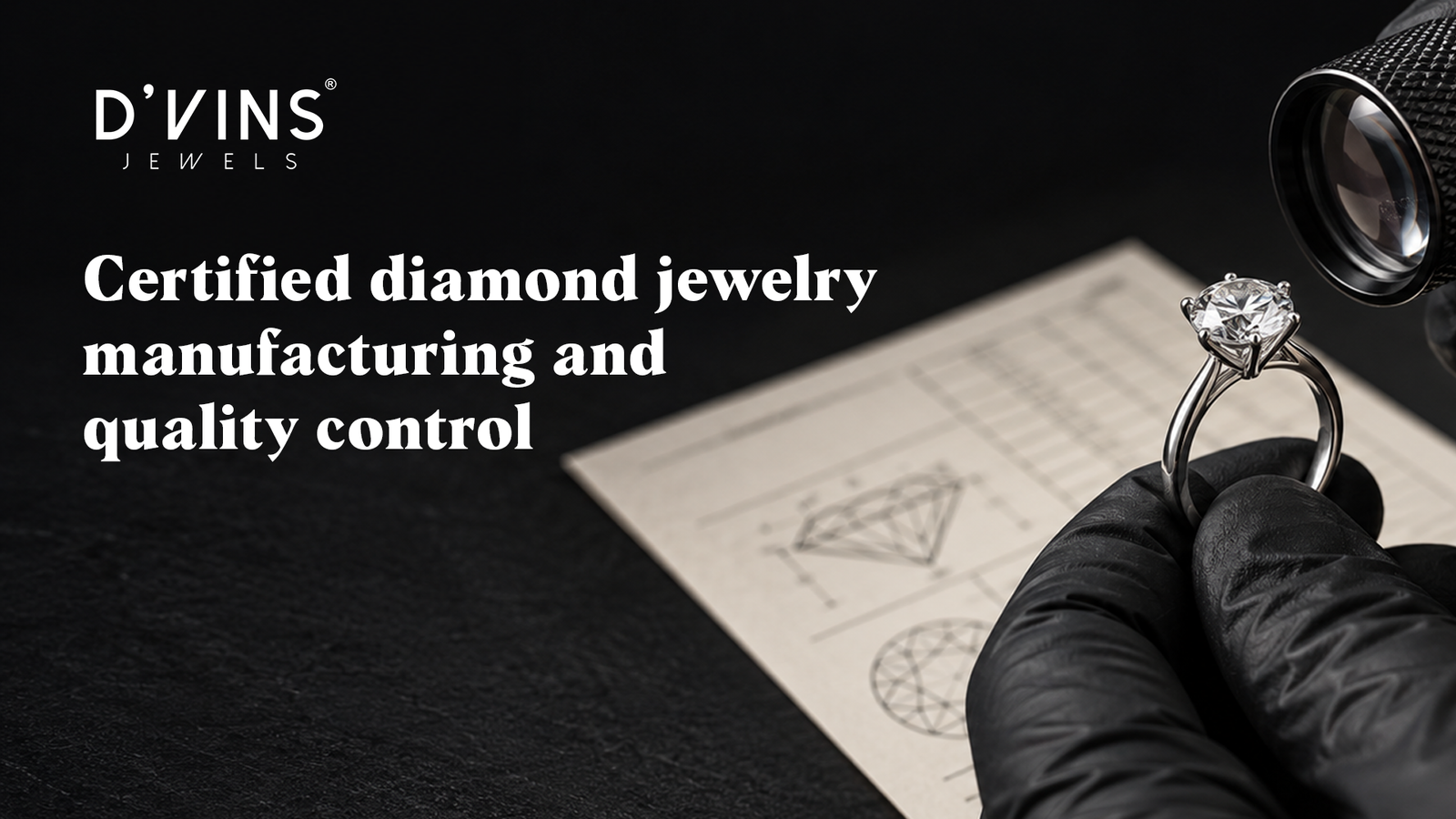
A grading report documents a diamond. It does not certify the workmanship of the jewelry it is set in. Finished jewelry needs its own checks: setting security, stone alignment, dimensions, metal purity, polish and consistency with the approved design. When you evaluate a manufacturer, ask how both are handled, because a perfectly graded diamond in a loose setting is still a returned product.
Common Certification Mistakes to Avoid
- Treating a report as a guarantee of market or resale value.
- Comparing grades from different laboratories as if they were identical.
- Judging size by carat weight instead of measurements.
- Accepting reports without verifying them with the issuing laboratory.
- Calling an entire piece “certified” when only the center stone has a report.
- Ignoring the origin of melee and accent stones in natural diamond jewelry.
Documents to Expect on Export Orders
If you import diamond jewelry, the paperwork matters as much as the product. Make sure your supplier can provide:
- Grading reports for the stones you specified, matched to each piece.
- Invoices that clearly state natural or lab-grown diamonds, with diamond weights.
- For natural diamonds, a System of Warranties statement on the invoice, the trade’s commitment that the diamonds come from sources compliant with the Kimberley Process.
- Any additional documents your country’s customs or retail regulations require.
What to Ask Your Manufacturer Before You Order
- Do you work with natural diamonds, lab-grown diamonds or both?
- Which laboratories can issue reports for my order?
- Which stones will receive individual reports, and how are reports matched to the stones?
- How do you screen and document small stones without reports?
- Can you share specifications and CAD designs for approval before production?
- What finished-jewelry quality checks happen before dispatch?
- What documents will come with my export shipment?
How D'vins Jewels Handles Certification
At D’vins Jewels, certification is planned at the design stage, not added after production. We have spent 10 years manufacturing diamond jewelry for B2B buyers from Surat, the diamond capital of the world, and here is what that means for your orders:
- Natural and lab-grown, made in-house. We manufacture both natural and lab-grown diamonds ourselves, with around 2,000 carats of production every month. You deal directly with the factory, with no middlemen and full control over supply and specifications.
- Reports from recognized laboratories. We supply diamonds with GIA, IGI and HRD reports, matched to your specification and your market.
- Specifications approved before production. You get your first CAD design free, within 24 hours, with multiple revisions until the design and diamond specifications are final.
- Quality checks you can see. Every piece passes through casting, setting, finishing and final inspection, and we share videos of your finished products before dispatch.
- One point of contact. A dedicated relationship manager handles your designs, documents and shipments.
- No MOQ. Start with the pieces you need and scale as your collection sells.
Conclusion
Certification protects your business only when it is specified correctly, verified properly and backed by a manufacturer who controls quality from the diamond to the finished piece. The right partner will answer every question in this guide before you place an order, not after a problem appears.
Ready to build your next certified diamond collection? Share your designs and diamond specifications with us, and we will send you a free CAD design within 24 hours along with wholesale pricing for natural or lab-grown options.
Frequently Asked Questions
Diamond certification usually refers to a grading report from an independent gemological laboratory that documents a diamond’s identity and quality. For retailers, it confirms that the stone matches what you paid for and gives your customers proof they can verify themselves.
Neither is better in every case. GIA is the most recognized name for natural diamonds, while IGI is widely used for lab-grown diamonds and also offers finished jewelry reports. Choose the laboratory your end customers recognize and trust.
Enter the report number on the issuing laboratory’s official website, compare the online details with the paper report, and check the laser inscription on the stone, where available.
Yes. GIA, IGI and HRD all issue reports for lab-grown diamonds. Since October 2025, GIA describes qualifying lab-grown diamonds as “Premium” or “Standard” instead of grading them on the 4Cs scale.
No. A report documents gemological characteristics. Market value depends on demand, pricing and other factors that a laboratory does not assess.
Yes. We manufacture natural and lab-grown diamond jewelry with GIA, IGI and HRD reports, with no minimum order quantity and a free CAD design within 24 hours.