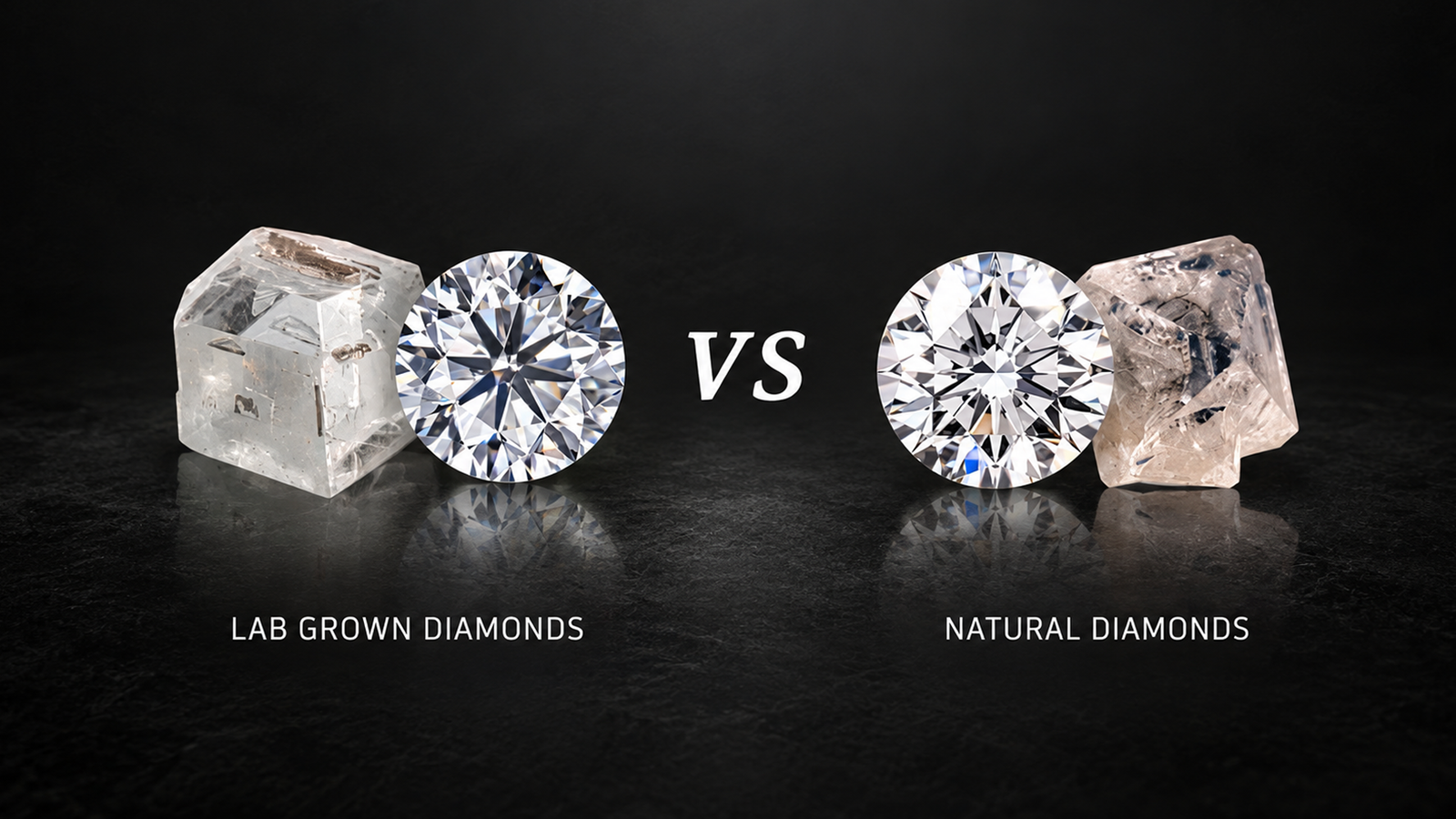
Two diamonds sit side by side on a tray, identical in shape, color, and clarity. One formed underground over a billion years ago; the other grew up in a laboratory weeks ago. Your customer cannot tell them apart, yet your pricing and product descriptions depend on knowing which is which.
We manufacture natural and lab-grown diamond jewelry for trade buyers in more than 15 countries, and the natural diamonds vs lab-grown diamonds question comes up in almost every new partnership. It shapes pricing, customer expectations, collection positioning, documentation and inventory planning. This guide explains the difference between natural and lab-grown diamonds from the manufacturing side, to support smarter diamond sourcing for jewelry brands, retailers and wholesalers.
What Are Natural Diamonds?
Natural diamonds formed from carbon deep in the Earth’s mantle, mostly one to three billion years ago. They are mined, cut, polished and graded on the 4Cs, with natural origin confirmed on the report. Finite supply and geological history make them the backbone of traditional fine jewelry and heritage-led brands.
What Are Lab-Grown Diamonds?
Lab-grown diamonds are real diamonds with a different origin, sharing substantially the same chemical, physical and optical properties as mined stones. Lab-grown diamond manufacturing uses two methods:
HPHT: Diamond Seed → High Pressure + High Temperature → Diamond Crystal
CVD: Diamond Seed → Carbon-Rich Gas in a Vacuum Chamber → Layer-by-Layer Growth
Origin is confirmed only with laboratory equipment.
Natural Diamonds vs Lab-Grown Diamonds: Key Differences
| Factor | Natural Diamonds | Lab-Grown Diamonds |
|---|---|---|
| Origin | Formed naturally within the Earth | Grown using laboratory technology |
| Composition | Crystalline carbon | Crystalline carbon |
| Physical Properties | Diamond properties | Substantially the same fundamental diamond properties |
| Appearance | Depends on individual stone quality | Depends on individual stone quality |
| Grading | Graded by gemological laboratories | Graded by gemological laboratories |
| Relative Pricing | Generally higher for comparable specifications | Generally lower for comparable specifications |
| Sourcing | Mining and supply-chain considerations | Laboratory production and supply-chain considerations |
| Brand Positioning | Heritage, natural origin, rarity | Technology-led production, accessibility, design flexibility |
Prices and preferences keep shifting, so evaluate individual stones against current market conditions.
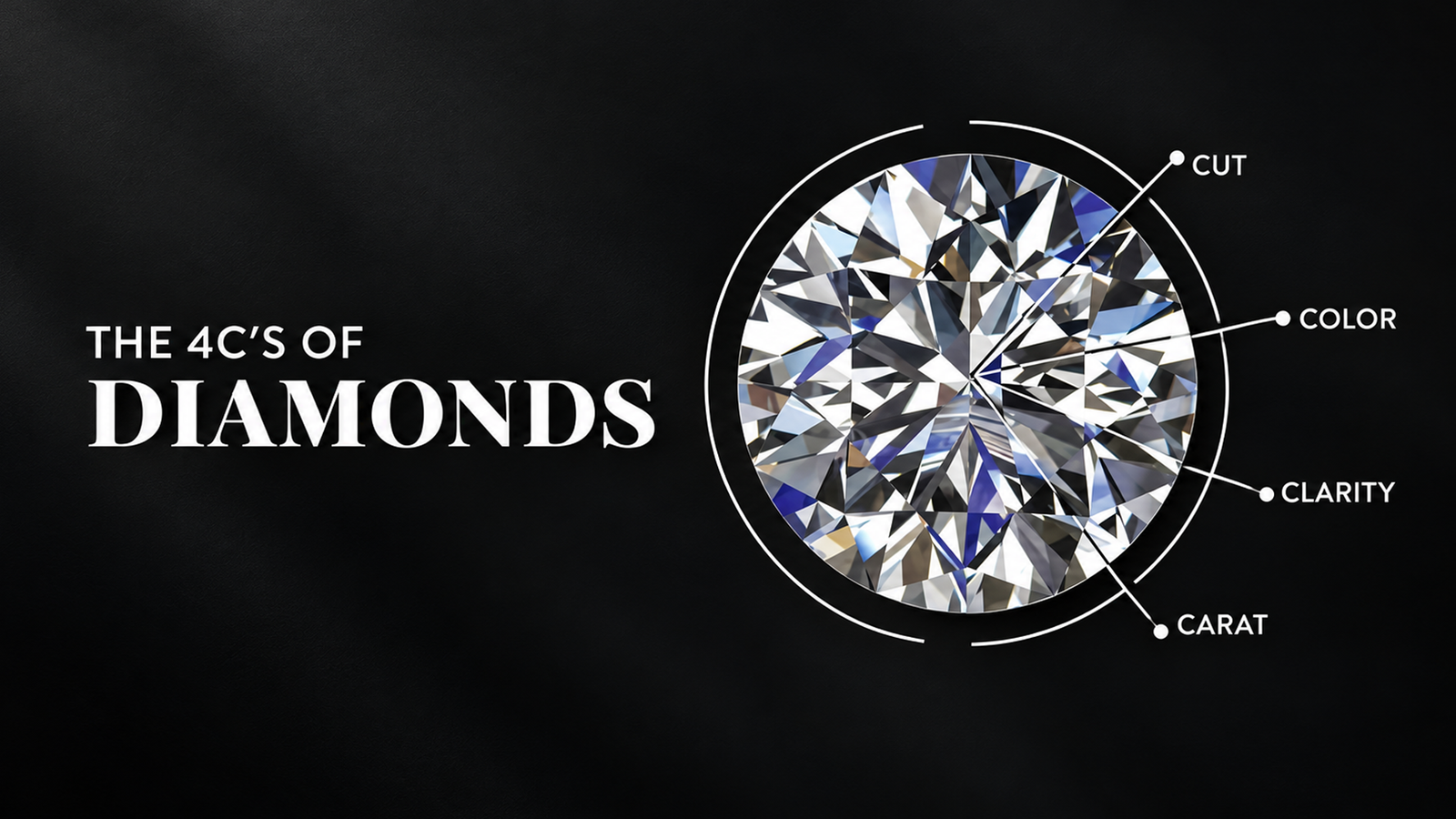
Natural vs Lab-Grown Diamonds: Understanding the 4Cs
Cut
Cut controls light return. Good proportions make a smaller stone look lively, and a consistent cut keeps halos and tennis bracelets uniform.
Color
Graded D (colorless) to Z. Warmer tones show more in white gold, and multi-stone designs need closely matched color.
Clarity
Many VS and SI stones look eye-clean, so visual appearance can matter more than the printed grade.
Carat Weight
Carat is weight, not size, and prices jump at milestones like 1.00 carat. When comparing lab-grown vs natural diamond cost, match shape, size and quality band first.
Natural vs Lab-Grown Diamond Cost: What Jewelry Brands Should Consider
Lab-grown stones are generally priced lower than natural stones of similar specification, but the diamond is one line in a finished piece. Carat, quality, shape, certification, metal, labor and setting complexity all add up, followed by wholesale pricing and retail margins. A lower procurement cost does not guarantee higher profit; demand, retail prices and inventory turnover decide earnings. Natural diamond vs lab-grown diamond value also differs, as lab-grown prices have fallen with scaled production.
Which Diamond Type Is Right for Your Jewelry Brand?
Natural diamonds suit brands focused on traditional fine jewelry, geological rarity and customers who want mined stones. Lab-grown diamonds for jewelry brands suit different price points, larger stones within a set budget and design-led collections. Offering both serves separate segments with clear pricing and transparent choice. When weighing natural vs lab-grown diamonds for retailers, let customer data decide.
Natural and Lab-Grown Diamonds in Wholesale Jewelry Manufacturing
Production depends on design and stone specifications more than origin. Whether you order wholesale lab-grown diamond jewelry or natural diamond jewelry wholesale, define shape, size, color and clarity. Matched natural parcels can take longer to assemble, and multi-stone designs need careful matching. Lock specifications so repeat orders match the first batch.
Diamond Certification and Disclosure: What Brands Must Know
Because origin cannot be judged by the eye, documentation is your first protection. Request reports from labs such as GIA, IGI, or HRD, verify report numbers online, and match inscriptions to stones. Since October 2025, GIA describes qualifying lab-grown diamonds as “Premium” or “Standard” instead of using 4Cs grades. A report does not guarantee market value or finished jewelry quality. Label products accurately and check disclosure rules in each export market, such as the US FTC Jewelry Guides.
Common Mistakes Jewelry Brands Should Avoid
The costliest mistake is treating both categories as interchangeable. Others include comparing prices without matching the 4Cs, unsupported sustainability claims, weak documentation and one pricing strategy for every collection.
How to Build a Natural or Lab-Grown Diamond Jewelry Collection
Define Your Target Customer → Choose Your Diamond Category → Establish Specifications → Develop Designs → Source Diamonds → Approve Samples → Set Quality Standards → Plan Production → Launch Collection
Set price points first, then choose shapes and sizes for rings, earrings, or pendants. Select diamonds alongside design and costing, never as a last-minute purchase.
What to Look for in a Diamond Jewelry Manufacturer
A strong custom diamond jewelry manufacturer handles both categories, coordinates diamond specifications, offers CAD and prototypes, and proves its setting, quality control and repeat-production standards. Export buyers also need responsive communication.
Natural and Lab-Grown Diamond Jewelry Manufacturing at D'vins
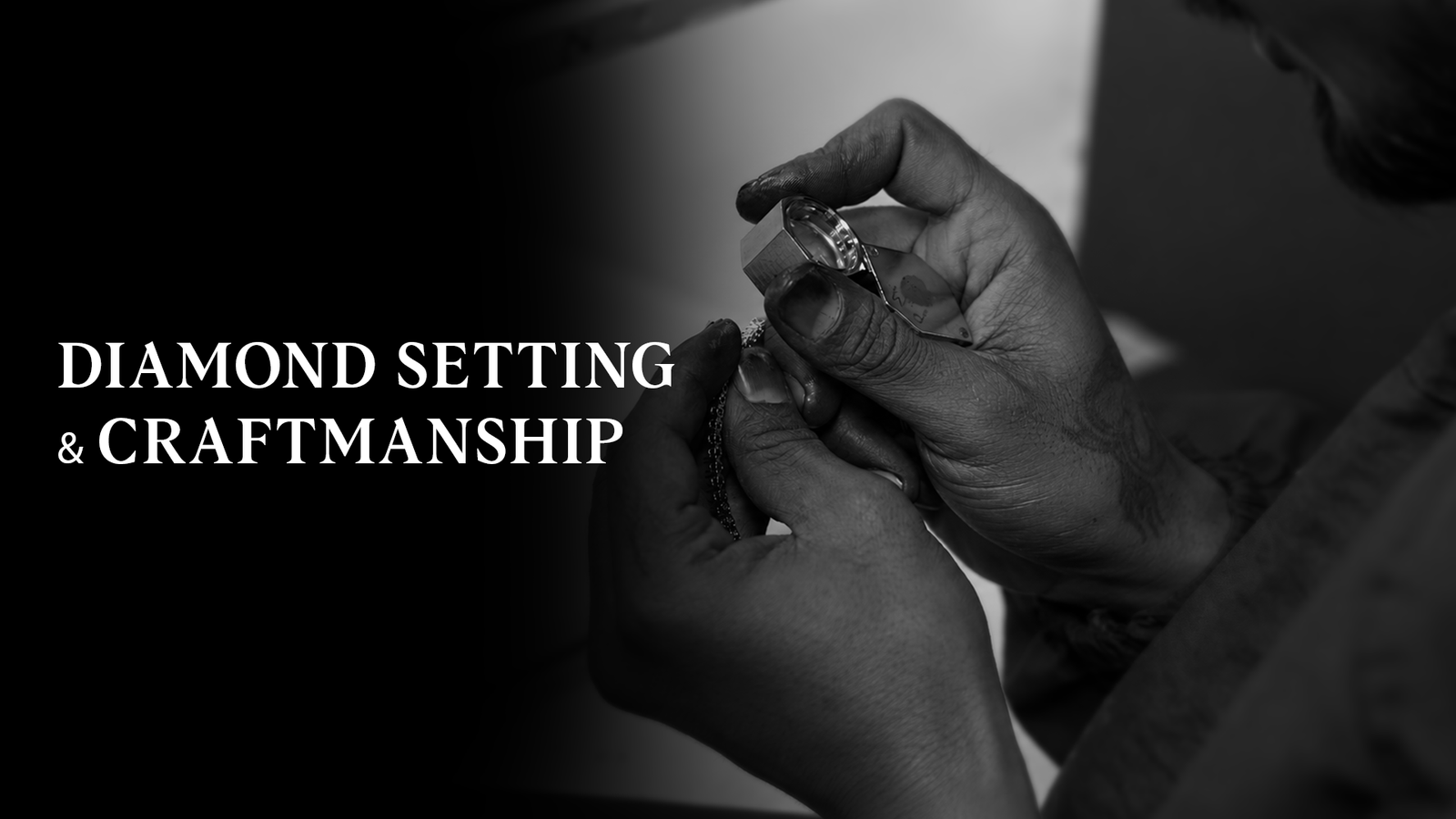
D’vins Jewels is a Surat-based natural diamond jewelry manufacturer and lab-grown diamond jewelry manufacturer with 10 years in B2B. Every custom project starts with a free CAD design, usually within 24 hours. Production runs through casting, diamond setting and quality checks, and we share videos of finished pieces before dispatch. We make rings, wedding bands, earrings, pendants, tennis chains and bracelets in silver and 10k to 18k gold, with flexible MOQ and a dedicated relationship manager.
Buyer Checklist: Before Choosing Natural or Lab-Grown Diamonds
- Strategy: Have we defined our target customer and retail price points?
- Strategy: Which diamond category fits this collection?
- Sourcing: Are diamond specifications clearly defined?
- Sourcing: Can the supplier confirm natural or laboratory-grown origin?
- Sourcing: Can grading reports be verified?
- Sourcing: Can matching stones be sourced for repeat orders?
- Manufacturing: Are samples approved before bulk production?
- Manufacturing: Are setting and finishing standards documented?
- Manufacturing: Are product disclosures accurate?
Conclusion
Natural and lab-grown diamonds offer different sourcing, pricing, and positioning paths. The right choice depends on your audience, collection strategy, and commercial goals, so evaluate quality, documentation, and manufacturing capability together.
Planning a natural or lab-grown collection? Share your designs and diamond specifications, and we will send a free CAD design within 24 hours with wholesale pricing for both options.
Frequently Asked Questions
Both are crystalline carbon. Natural diamonds formed over billions of years, while lab-grown diamonds are produced in weeks using HPHT or CVD.
Yes. They share substantially the same properties as natural diamonds; only their origin differs, and it must be disclosed.
Generally, yes, for comparable specifications. Finished jewelry cost also depends on metal, labor and setting.
No. Origin is confirmed with laboratory equipment and verified grading reports.
Both are assessed on cut, color, clarity and carat, though GIA now uses “Premium” or “Standard” for lab-grown stones.
Neither is universally better. It depends on your customers, price points, and positioning.
Yes. Labs such as IGI and GIA issue reports confirming laboratory-grown origin.