
A jewelry design can look perfect on CAD and receive approval as a physical sample, yet the real test begins when that same design moves into bulk production. Producing one accurate sample is very different from reproducing the same specifications, dimensions, stone placement, weight expectations, and finishing across a complete order. For jewelry brands, retailers, wholesalers, and international buyers, this is why Jewelry Manufacturing Quality Control should be evaluated before production begins, not only after finished pieces are ready for dispatch.
A small inconsistency in one piece may appear manageable. When the same issue is repeated across dozens or hundreds of units, however, it can lead to rework, replacements, delivery delays, customer complaints, and product experience that does not match the brand’s expectations.
Effective quality control is therefore not simply a final inspection. It is a structured manufacturing discipline that begins with clear specifications and continues through CAD, sampling, material verification, gemstone inspection, setting, finishing, final review, and packaging. For brands selecting a jewelry manufacturer, the more useful question is not simply whether the manufacturer can produce quality jewelry. The better question is: How is quality controlled throughout production?
Why Quality Control Matters in Jewelry Manufacturing
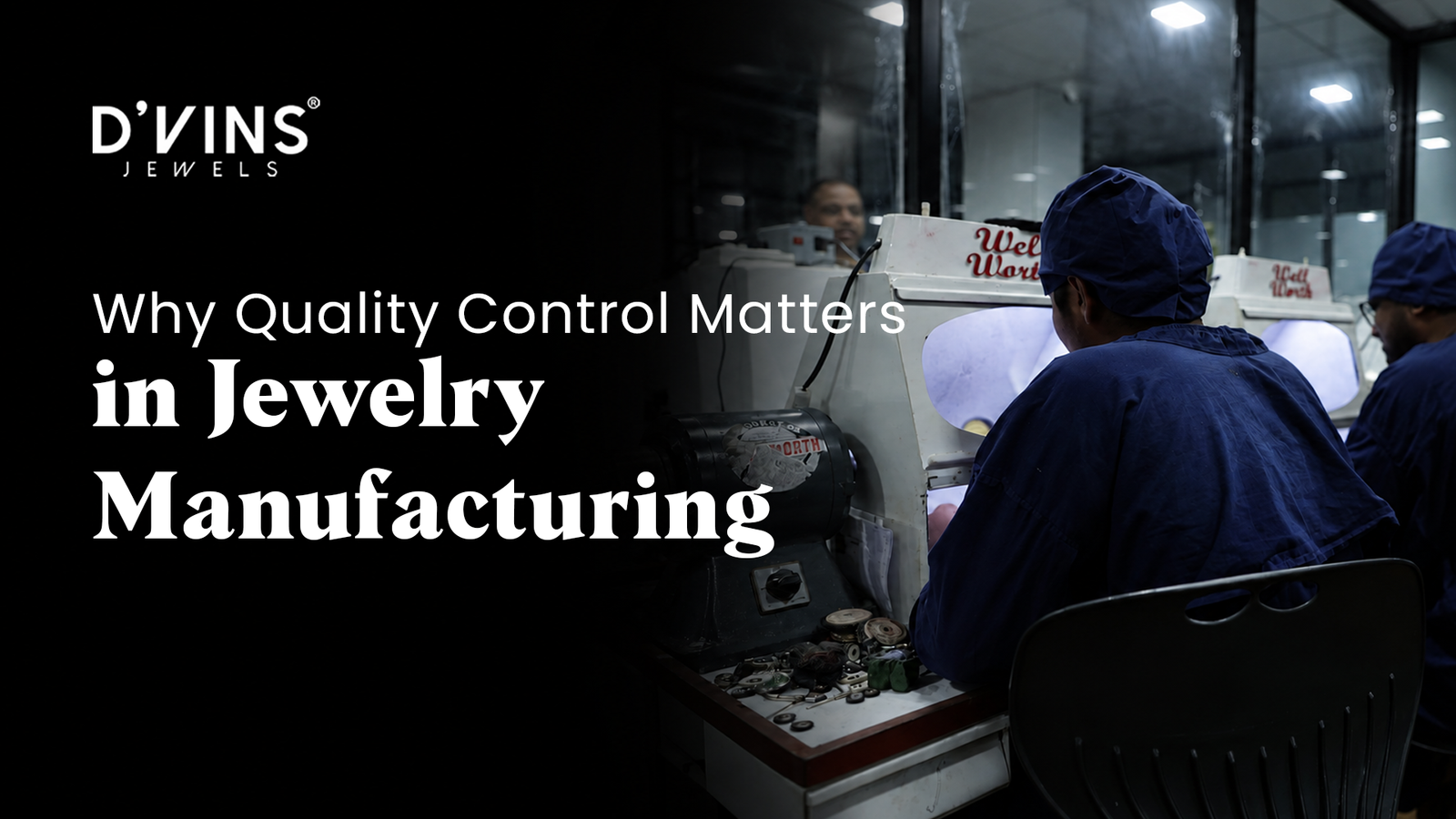
Jewelry manufacturing involves many details that must work together accurately. Dimensions must follow approved requirements, stones must match the intended specifications, settings must be secure, finishing must remain consistent, and bulk production should stay aligned with the approved sample. For a jewelry business, quality directly affects more than the appearance of the finished product. It influences customer satisfaction, repeat orders, delivery reliability, production costs, and the confidence a brand can place in its manufacturing partner.
Strong jewelry quality control also becomes more important as production volumes increase. A brand may approve a single prototype without difficulty, but scaling that design requires repeatable processes. Without defined checkpoints, variations in casting, setting, polishing, or material handling may gradually create differences between pieces. The goal of quality control is to make sure the approved specification remains the manufacturing reference throughout the order.
What Does Jewelry Manufacturing Quality Control Mean?
Jewelry manufacturing quality control is the process of checking products and production stages against defined requirements to identify defects, deviations, or inconsistencies. It works closely with jewelry quality assurance, but the two terms are not identical.
Quality Assurance, or QA, focuses on prevention. It involves setting standards, documenting requirements, establishing processes, recording approvals, and creating checkpoints before problems occur.
Quality Control, or QC, focuses on verification. It involves inspecting materials, components, workmanship, dimensions, stone placement, finishing, and completed products to confirm that production matches approved requirements.
A reliable jewelry manufacturer quality control system uses both approaches. QA creates a controlled process; QC verifies whether that process is producing the intended result.
Jewelry Manufacturing Quality Control Process
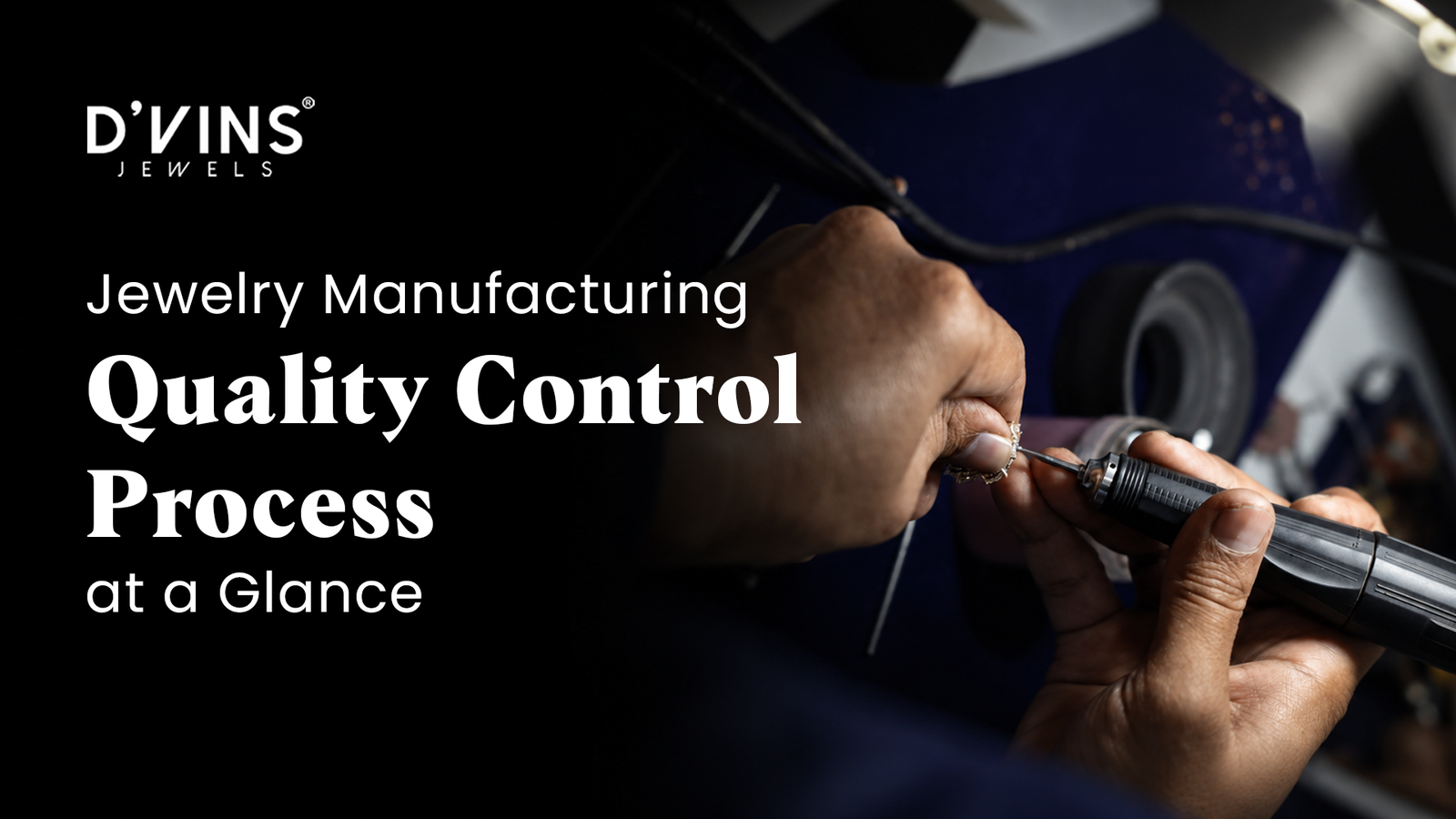
A structured jewelry manufacturing process generally follows a sequence such as:
Design Review → CAD Verification → Prototype Inspection → Material Verification → Production Review → Diamond/Gemstone Inspection → Setting Check → Finishing Inspection → Final QC → Packaging and Dispatch
The value of this approach is simple: problems can be identified at the stage where they occur rather than being discovered only after the full order is completed.
1. Design and Specification Review
Quality control starts before any physical production takes place.
At the design review stage, the manufacturer needs a clear understanding of dimensions, metal specifications, stone requirements, design details, and expected production outcomes. The purpose is not simply to understand how the product should look but also to determine whether the design can be manufactured consistently.
A design may appear correct visually while still creating technical challenges in production. Stone placement, structural thickness, dimensions, or construction details may require review before the design moves forward. For the brand, this stage is an opportunity to ensure that important specifications are documented instead of relying on verbal understanding. At D’vins, this stage is approached as a specification-alignment step before production. The objective is to create clarity around the approved design and manufacturing requirements before the order progresses.
2. CAD Verification Before Production
CAD is one of the most important links between a jewelry concept and the physical product. During CAD verification, measurements, proportions, stone positions, structural details, and production feasibility are reviewed. A CAD model should not be assessed only for visual similarity. It should also be evaluated as a production reference. An error at this stage can carry forward into prototyping and bulk production. Incorrect dimensions, unsuitable stone positioning, or weak structural areas may become more difficult and expensive to correct later.
For brands, CAD approval should therefore be treated as a technical checkpoint rather than a simple visual confirmation.
3. Prototype and Sample Inspection
The physical sample is where digital expectations meet actual production. A sample should be inspected against the approved design and specifications, including dimensions, material requirements, stone placement, finishing, and overall workmanship. This stage is especially important because the approved sample often becomes the benchmark for bulk manufacturing. If a discrepancy exists in the sample but is not documented or corrected, that discrepancy may be repeated throughout the order.
Sample approval should therefore establish a clear reference for what the brand expects production to match.
4. Metal and Weight Verification
Metal specifications can affect cost, dimensions, wearability, and product consistency. For that reason, material and weight checks are an important part of jewelry production quality standards. The manufacturer should work from documented requirements covering the agreed metal type, applicable purity expectations, dimensions, and weight parameters where relevant to the order. Variations can occur during production, which is why brands should clarify what tolerances or specifications are being followed before the manufacturing run begins.
This is particularly important for private label and repeat orders, where one production batch may need to match previous production closely.
5. Diamond and Gemstone Inspection
For diamond and gemstone jewelry, quality control becomes more detailed because the stones are both functional components and major contributors to the final product. The inspection process should verify that stones correspond to the specifications defined for the order. This may include size, matching expectations, placement, quantity, and other agreed quality parameters. For international buyers, requirements should be documented before manufacturing begins. Terms such as “matching stones” or “same quality” can be interpreted differently unless the specification is clearly established.
A structured diamond jewelry quality control process helps reduce these ambiguities and creates a clearer production reference for both the brand and manufacturer.
6. Diamond and Gemstone Setting Inspection
Stone setting introduces another area where production consistency matters. During inspection, the manufacturer should review stone security, alignment, placement, and the workmanship of the setting. Prongs, bezels, or other setting structures should correspond to the approved design and perform their intended function. Setting inconsistencies may affect both appearance and product reliability. A slight alignment difference may be highly visible in a design with repeated stones, while insufficient security can create a more serious product issue.
For this reason, setting checks should take place during production rather than depending entirely on the final inspection.
7. Polishing and Finishing Inspection
Finishing can reveal production inconsistencies that were less visible during earlier manufacturing stages. A jewelry quality inspection at this point should review surface condition, polish consistency, edges, visible marks, and the details that influence the final product presentation. Finishing is also an area where human variation can affect consistency. When several pieces belong to the same collection, differences between units may become easier to notice.
The objective of finishing inspection is therefore not simply to make each product individually acceptable, but to ensure that the complete order follows the same agreed standard.
8. Final Jewelry Production Quality Check
Final inspection is the last formal checkpoint before packaging and dispatch. At this stage, the completed product should be reviewed against the approved specifications and sample. The manufacturer may verify dimensions, finishing, stone placement, workmanship, quantity, packaging requirements, and other documented order details.
Final QC is important, but it should not be expected to compensate for weak controls earlier in production. The strongest systems use final inspection as confirmation that previous production checkpoints have worked effectively.
Common Jewelry Manufacturing Quality Issues
| Quality Concern | How It May Develop | Relevant Quality Check |
|---|---|---|
| CAD-to-production variation | Design interpretation or production feasibility issues | CAD verification and sample approval |
| Weight or dimension variation | Material or process differences | Measurement and specification checks |
| Loose or uneven stones | Setting variation | Stone-setting inspection |
| Surface marks or inconsistent finish | Polishing and handling variation | Finishing inspection |
| Sample-to-bulk mismatch | Weak production reference or process control | Approved sample and in-process checks |
Sample vs Bulk Production: Why Consistency Matters
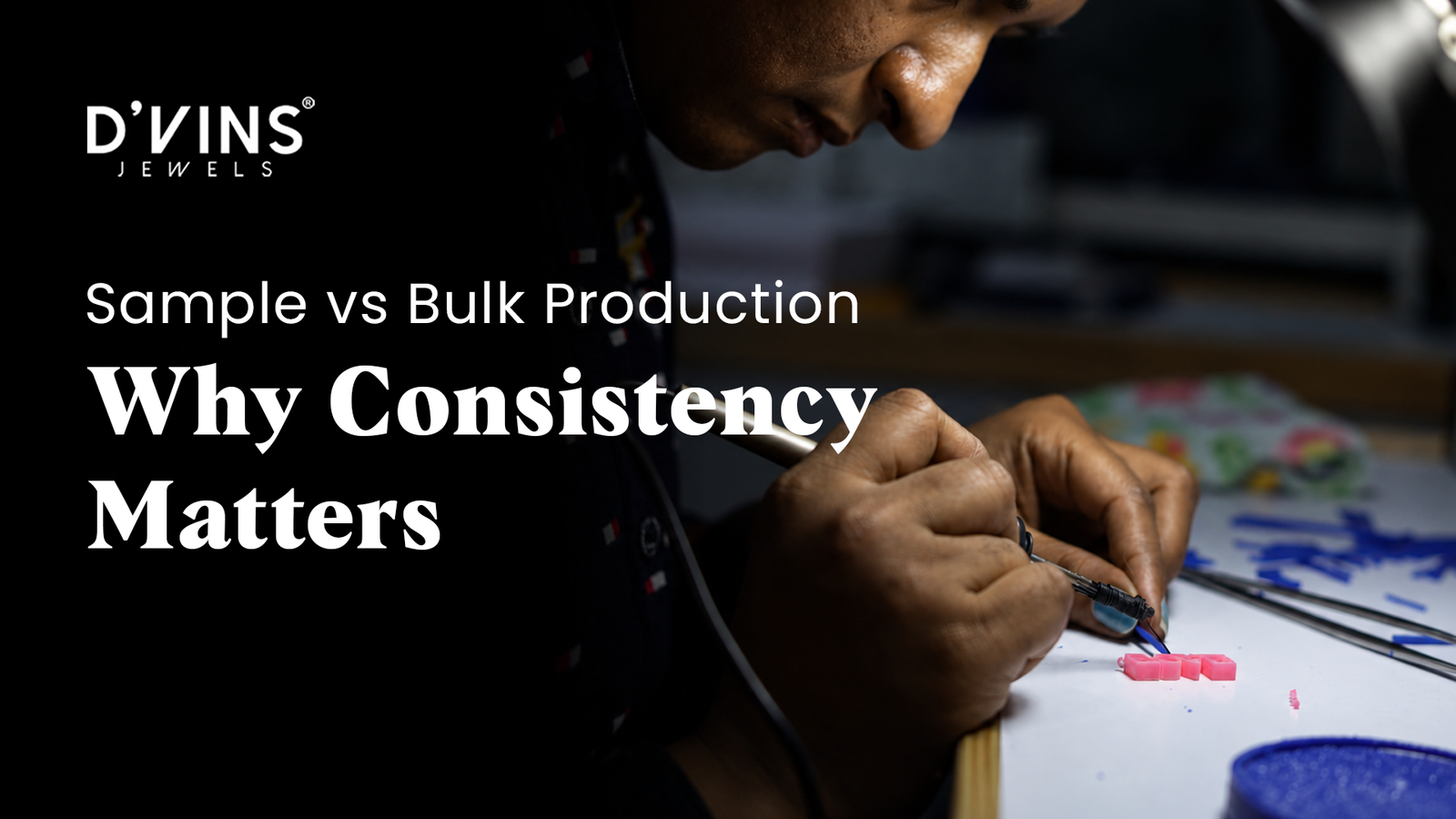
One of the most important questions for a jewelry brand is whether the manufacturer can maintain the approved sample standard during full production.
Approved sample does not automatically mean consistent bulk production.
A sample may be made with more individual attention, while bulk manufacturing introduces higher quantities, multiple production stages, material handling, casting variation, setting work, and finishing processes.
This is where quality control in jewelry manufacturing needs to move from product inspection to process consistency. Before approving bulk production, a brand should understand how the approved sample is recorded, how specifications are communicated to production teams, how deviations are identified, and what happens when a piece does not meet the required standard. For repeat orders, the same principle becomes even more important. The manufacturer should be able to work from established references so that future production remains aligned with previous approved output.
Quality Control for Diamond Jewelry
Diamond jewelry requires clear specifications before manufacturing because vague requirements can create misunderstandings later.
The brand and manufacturer should agree on relevant diamond requirements, matching expectations, size, placement, setting approach, and documentation where applicable to the order. Within a multi-stone piece, visual consistency may depend on how well stones work together rather than how each stone is evaluated individually. Stone placement also matters because even small differences may become visible in repeated settings or symmetrical designs.
Setting security then needs to be checked after placement, followed by a final jewelry manufacturing inspection before dispatch. For US and global buyers, defining these requirements in advance creates a clearer commercial and manufacturing reference and reduces reliance on subjective descriptions.
How Quality Control Can Affect Manufacturing Costs
Poor quality control can create costs that extend beyond the defective piece itself.
A problem discovered late may require rework, replacement production, additional inspection, packaging changes, shipment adjustments, or revised delivery timelines. If the product has already reached the customer or retailer, the cost may also involve returns and customer service.
Good QC does not guarantee lower costs in every situation, and stronger inspection processes themselves require time and resources. However, identifying issues earlier can make corrections easier to manage than discovering the same issue after a complete production run.
For brands, quality control should therefore be evaluated as part of production planning rather than as an optional final expense.
Quality Control for Custom, Private Label, Bulk and Repeat Orders
Different jewelry orders create different quality-control priorities.
Custom jewelry places greater emphasis on design accuracy, individual specifications, and sample approval because the product may be created for a specific brief.
Private label jewelry requires strong repeatability. The manufacturer is producing products that will represent another brand, so consistency across the collection and across future orders becomes important.
Bulk and wholesale production increases the importance of batch consistency and quantity control because small process variations can affect many pieces. Repeat orders introduce another challenge: the new production run should remain aligned with the previously approved specification. Documentation and production references become particularly valuable at this stage.
Certifications, Documentation and Quality Evidence
Brands should distinguish between general marketing language and actual quality evidence.
Statements such as “high quality” or “best manufacturing” provide very little information about how production is controlled. More useful evidence may include approved specifications, sample references, inspection records, material or gemstone documentation where applicable, and any relevant certifications the manufacturer can actually provide.
A manufacturer should not be evaluated solely on the number of certificates displayed. The more important question is whether the documentation is relevant to the product, order, market, or quality claim being discussed.
For D’vins, any certification or documentation presented to buyers should be based on what is applicable and available for the specific manufacturing requirement rather than used as a general unsupported claim.
D'vins Jewelry Manufacturing Quality Control Approach
D’vins approaches quality control as a process that begins before final inspection.
The focus is on creating clear production references, reviewing key stages of manufacturing, and aligning finished products with approved requirements. Design and specification review establishes the production brief. CAD and sample evaluation help translate that brief into a physical reference. During manufacturing, gemstone placement, setting workmanship, and finishing can be checked against the agreed requirements. A final quality review then provides an additional checkpoint before products move toward dispatch.
This process-based approach is more meaningful for brands than simply stating that products are “high quality.” It gives buyers a clearer understanding of where quality decisions are made and how production can be evaluated. Where relevant, brands should also request supporting samples, manufacturing references, documentation, or quality evidence that applies to their order.
How to Choose a Jewelry Manufacturer Based on Quality Control
A manufacturer’s product portfolio can show what they have produced, but it does not always explain how consistently they can reproduce it.
When evaluating a jewelry manufacturer for brands, buyers should look at the process behind the product. The manufacturer should be able to explain how specifications are recorded, when inspections occur, how samples are approved, how material and stones are verified, and how non-conforming pieces are handled.
Transparent communication is also part of quality management. If an issue appears during production, brands need to know how it will be communicated and resolved rather than discovering the difference only after delivery. The key question is simple: Do not ask only, “Do you provide quality jewelry?” Ask, “How do you control quality?”
Jewelry Manufacturing Quality Control Buyer Checklist
Before confirming production, use this checklist as a final buyer reference:
- Final design and CAD requirements are approved.
- Metal, weight, dimensions, and stone specifications are documented.
- Physical sample or prototype expectations are agreed.
- Sample-to-bulk consistency requirements are discussed.
- In-process quality checkpoints are understood.
- Final jewelry production quality check is confirmed before dispatch.
- Packaging and required order documentation are agreed.
Conclusion
Jewelry Manufacturing Quality Control should begin at the design and specification stage, not when finished jewelry reaches the inspection table. For brands, consistent manufacturing depends on clear requirements, approved references, controlled production stages, reliable inspection, and transparent communication between the buyer and manufacturer. The right manufacturing partner should be able to explain how quality is managed throughout the process and how production is kept aligned with the approved specifications.
D’vins works with jewelry brands, retailers, wholesalers, and businesses seeking a structured manufacturing approach focused on production consistency, clear quality checkpoints, and reliable execution. If your business is preparing a custom collection, private label range, repeat order, or larger production run, discuss your design specifications and quality requirements with D’vins before production begins.
Frequently Asked Questions
Quality control in jewelry manufacturing is the process of inspecting materials, components, workmanship, and finished products at different stages to confirm that production matches approved specifications and quality requirements.
Jewelry manufacturers may use multiple checkpoints, including design review, CAD verification, prototype inspection, material and dimension checks, gemstone inspection, setting review, finishing inspection, and final quality verification before dispatch.
A brand should confirm that the sample matches the approved design, dimensions, material requirements, gemstone placement, weight expectations where relevant, and the required finishing. The approved sample should also be documented clearly enough to act as a production reference.
Bulk quality depends on documented specifications, approved samples, defined production procedures, in-process inspections, and final verification. Brands should ask how these controls are maintained as production volume increases.
Diamond jewelry quality control may include verification of agreed stone specifications, size, matching, placement, setting security, visual consistency, and supporting documentation where relevant to the order.
Brands should understand when quality checks occur, how approved samples and specifications are recorded, how materials and stones are verified, how bulk consistency is maintained, how failed pieces are handled, and what final inspection takes place before dispatch.
Quality control helps brands maintain product consistency, reduce avoidable manufacturing risks, manage customer expectations, and create more reliable production across initial and repeat orders.