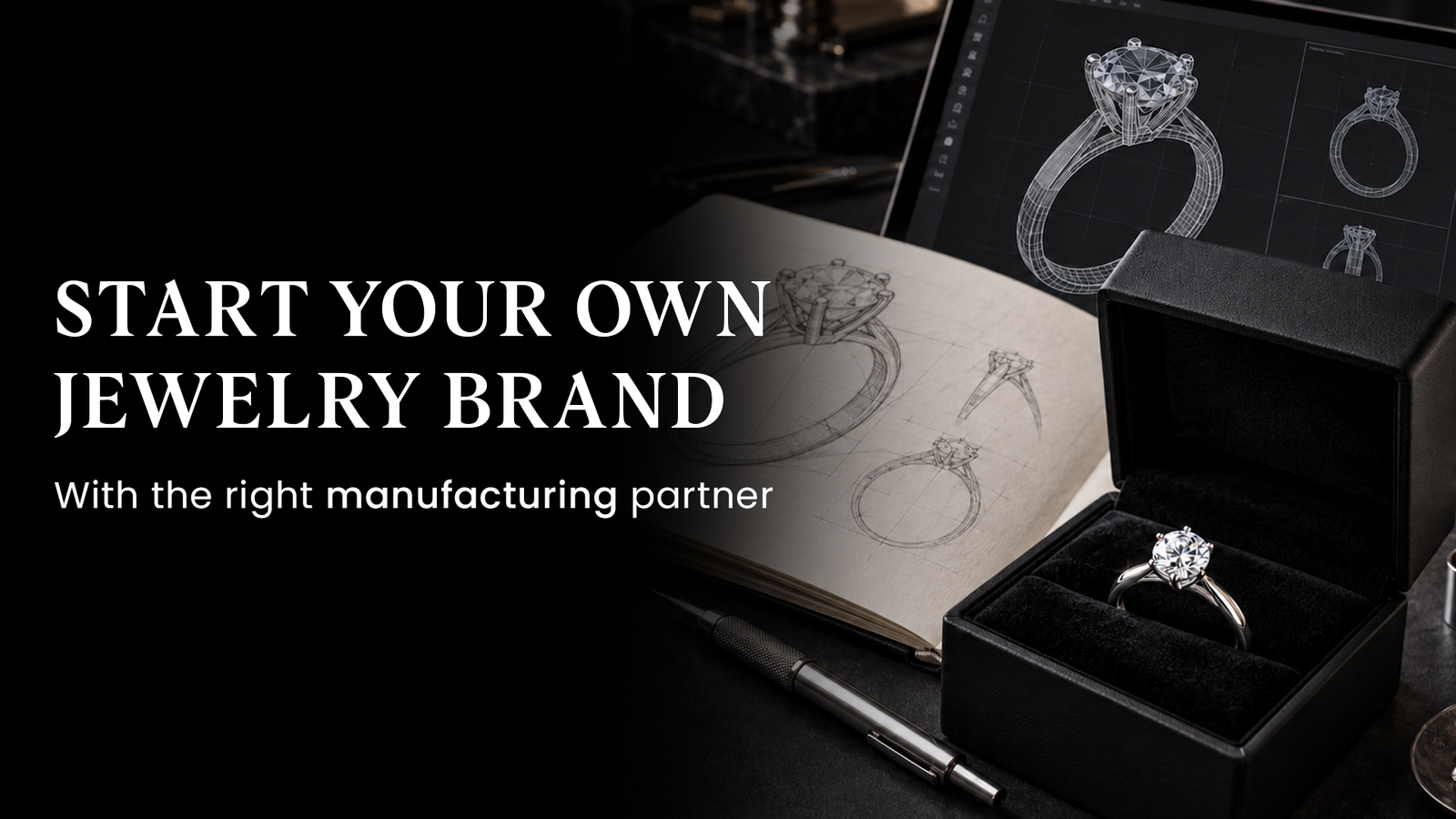
As a Surat diamond jewelry manufacturer, we often hear from founders who start with a sketchbook, a clear customer in mind and no factory at all. If you are researching how to start a jewelry brand, the good news is that you do not need to own a workshop. You do need a plan for branding, product development, sourcing, manufacturing, pricing and marketing.
The most common founder question is simple: can I start my own jewelry brand without a factory? Yes. A jewelry manufacturing partner handles production while you focus on the brand and on growth. This guide shows how to start a jewelry business in nine steps.
Can You Start a Jewelry Brand Without Manufacturing Jewelry Yourself?
Understanding the Jewelry Brand Business Model
Owning a brand and running a factory are different businesses. When you start your own jewelry brand, you own positioning, pricing, sales and customer experience, while a manufacturer makes the pieces.
Benefits of Working With a Jewelry Manufacturing Partner
You gain skilled craftspeople and production systems without building them yourself. You still need a budget, clear specifications and active quality oversight.
Step 1: Define Your Jewelry Brand Identity and Target Market
Decide who you serve: fine jewelry buyers, bridal customers, fashion-led shoppers or gift buyers. Study their budgets, preferences and buying habits, and look for gaps your competitors miss.
Then choose a position, such as affordable luxury, premium fine jewelry, minimalist design, bridal or personalized pieces, because it shapes materials, pricing, packaging and marketing. Finish with a brand name, logo, story and packaging style, and check trademark availability in every market you plan to sell in.
Step 2: Decide What Type of Jewelry You Want to Sell
Select Your Initial Product Categories
Start focused. Ten connected rings and earrings are easier to develop, photograph and sell than forty unrelated designs, because every extra category adds development, production and inventory work.
Choose Materials and Diamond Options
Silver, 14K or 18K gold, platinum, natural diamonds, lab-grown diamonds and colored gemstones each change cost and customer expectations. Match materials to your target price and brand identity. If you plan to use lab-grown diamonds, build disclosure into your product names and listings from day one. In the US, the FTC Jewelry Guides expect lab-grown origin to be stated clearly next to the word “diamond.”
Custom Jewelry vs Private Label Jewelry
A custom jewelry manufacturer develops your original designs, which gives you full control but needs more development time and setup cost. A private label jewelry manufacturer adapts existing or manufacturer-supported designs under your brand, which usually launches faster. Our private label jewelry manufacturing guide explains that route in detail.
Step 3: How to Create Your Own Jewelry Line
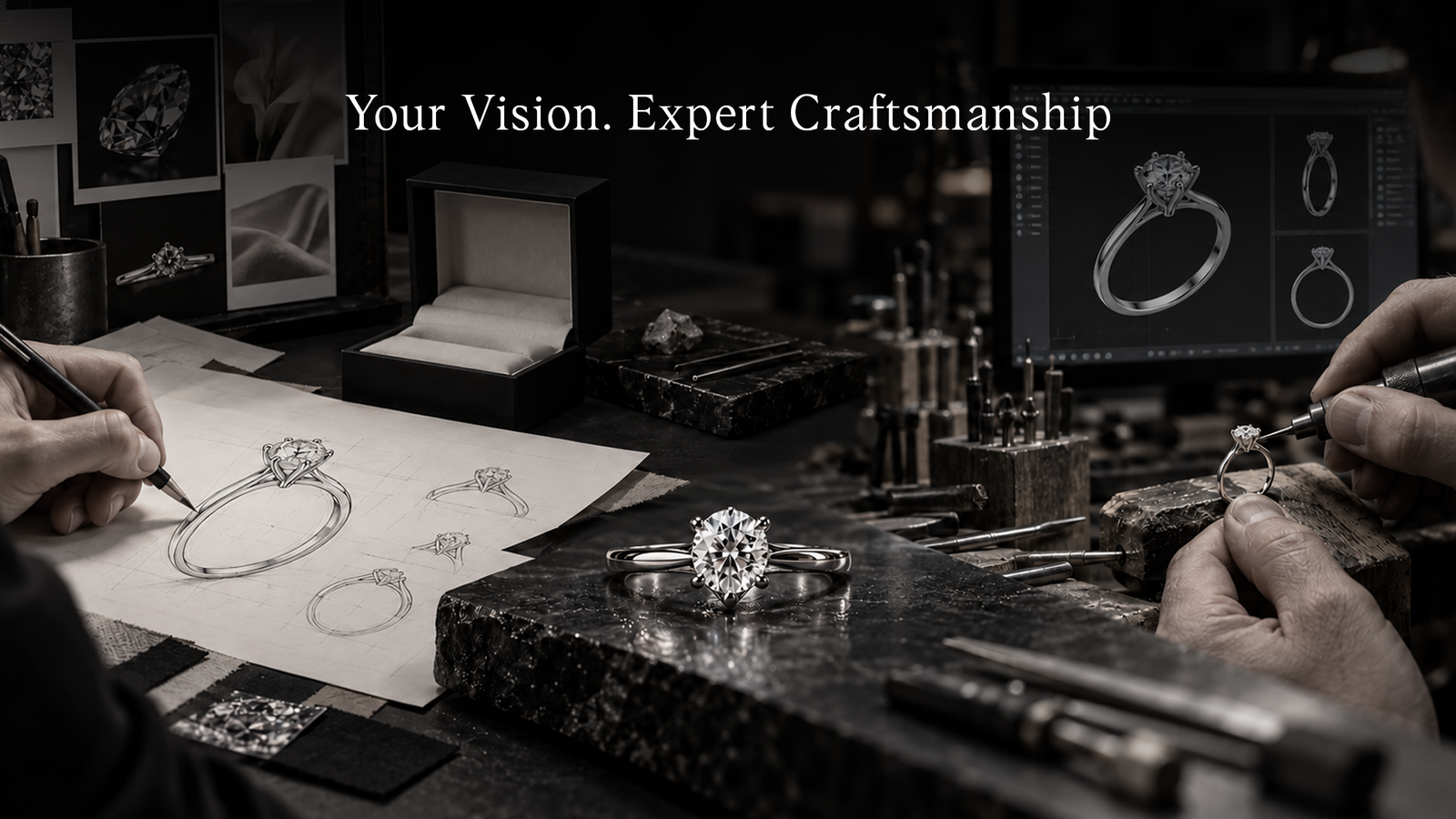
Build a mood board, sketches and references around one theme and one customer occasion, and keep the first collection small enough to test. Write specifications for dimensions, metal purity, stones, setting style, finish, target weight and sizes, and separate the essentials from the nice-to-haves. Detailed specifications produce accurate quotes. Agree in writing who owns your designs, CAD files and molds, and sign confidentiality or exclusivity terms where needed.
Step 4: How to Find a Jewelry Manufacturer for Your Startup
A good jewelry manufacturer for startups knows your category and materials, checks design feasibility, explains sampling and order quantities clearly, follows defined quality checks, quotes transparently and can grow with you. Before committing, ask:
- What types of jewelry and materials do you manufacture?
- Do you support custom designs or private-label production?
- What are your minimum order quantities?
- How do sampling and design approval work?
- How are manufacturing costs calculated?
- What is the estimated production timeline?
- What quality-control checks are performed?
- Can you provide documentation for the materials or stones used?
- What are the payment, shipping and reordering terms?
Avoid choosing on price alone, skipping written specifications, ignoring sample and shipping charges, and never discussing repeat-order consistency. For a full evaluation framework, read how to choose a custom diamond jewelry manufacturer, and check the jewelry manufacturer red flags to spot before you pay.
Are You Ready to Talk to a Manufacturer?
You are ready to contact a manufacturer when you have a defined customer and price point, 5 to 10 reference designs, a working budget for samples and first production, and a sales channel ready to sell. If that describes you, send your references to D’vins Jewels
Step 5: Understand Jewelry Brand Startup Costs
| Cost Area | What It Covers |
|---|---|
| Design and development | Concept work, CAD modeling, samples and molds |
| Manufacturing | Metal, stones, labor, setting and finishing |
| Packaging and branding | Boxes, pouches, tags and inserts |
| E-commerce | Website, platform fees and product listings |
| Photography and marketing | Product shoots, ads, content and launch promotion |
| Logistics | Shipping, insurance, import duties and taxes |
| Business setup | Registration, trademarks and compliance |
| Product compliance | BIS hallmarking with HUID for gold sold in India’s notified districts; clear lab-grown disclosure for US listings |
Jewelry manufacturing minimum order quantity drives your opening inventory spend. Smaller launches reduce risk but can raise unit costs, so ask about MOQ per design and per variation. Then separate manufacturing cost, landed cost, wholesale price and retail price, and model your margins after marketing, fulfillment, returns and payment fees. Our breakdown of custom jewelry manufacturing cost shows what drives each line.
Step 6: Develop Samples and Approve Your Designs
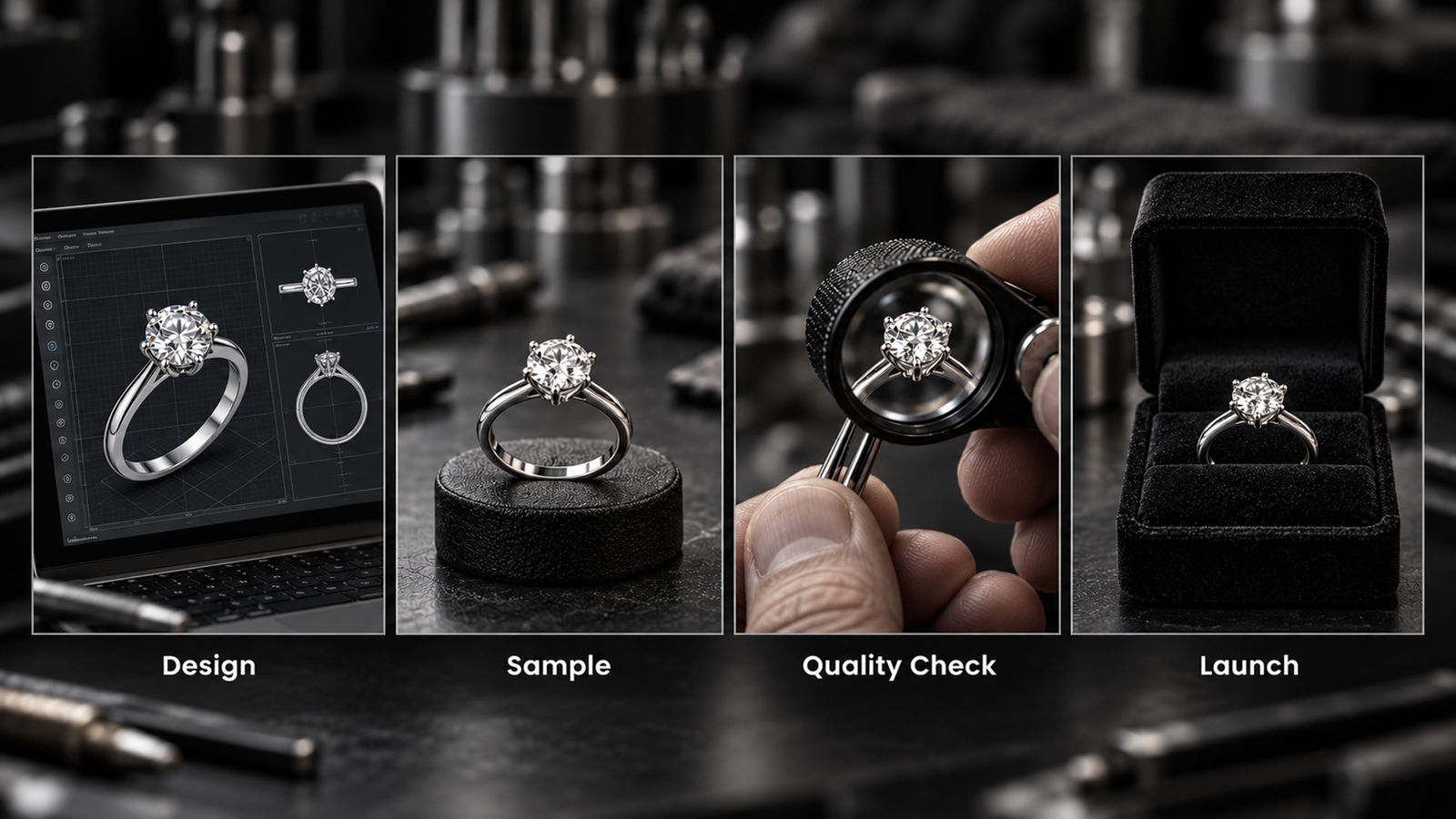
Your idea becomes a CAD model, where dimensions, settings and proportions are checked for feasibility. Samples are then judged on appearance, size, comfort, stone security and finish against the approved specification. Record every change, approve the final version in writing and confirm quantities, sizes, packaging, quote and schedule before bulk production. This is the heart of the jewelry brand development process.
Step 7: Plan Manufacturing, Quality Control and Delivery
Production moves from approval to sourcing, manufacturing, inspection and dispatch. Timing depends on complexity, quantity, materials and approvals, so plan backward from launch day using a realistic jewelry manufacturing timeline. Agree inspection criteria for metal, stones, dimensions and finish, and decide in advance how defects are handled. Remember that factory completion is not delivery; freight, insurance and customs add time.
Step 8: Build Sales Channels and Launch a Jewelry Collection
Choose the channels your customers already use: your own online store, marketplaces, boutiques or wholesale accounts. Before you launch a jewelry collection, have product photography, sizing guides, packaging, fulfillment and customer support ready, and describe materials honestly. Never promise delivery dates before stock has landed.
Step 9: Scale Your Jewelry Brand With a Manufacturing Partner
Start Your Jewelry Brand With D'vins Jewels
D’vins Jewels is a Surat-based custom jewelry manufacturer with 10 years in B2B. We manufacture for trade buyers: jewelry retailers, wholesalers, distributors, online sellers and jewelry brands. For new brands, we offer custom jewelry production for startups and private-label collections in natural and lab-grown diamonds, in silver and 10K to 18K gold.
Founders get a free CAD design, usually within 24 hours, flexible MOQ and a dedicated relationship manager, and we ship to brands in more than 15 countries. Key stones are available with GIA or IGI grading reports, and natural diamonds can also be graded by HRD. For jewelry manufacturing for small businesses, that means you can test a collection without heavy upfront stock.
In your first inquiry, share your brand concept and customer, product categories and references, metal and stone preferences, initial quantity, target budget, destination market and launch date. Not sure what to include? Use our guide to getting a jewelry manufacturing quote.
Conclusion: Turn Your Jewelry Brand Idea Into a Business
Knowing how to launch a jewelry brand comes down to a clear niche, a focused collection, the right materials, a realistic budget, a reliable manufacturer, approved samples and ready sales channels. Choose your partner early, and every later decision gets easier. Ready to start a jewelry business with a manufacturer? Share your idea with D’vins Jewels.
Frequently Asked Questions
Define your brand and collection, then work with a manufacturer who handles CAD, sampling and production.
It depends on materials, collection size, MOQ, packaging and marketing. Get quotes on real specifications first, then budget separately for samples, photography and launch marketing.
Compare experience, MOQ, sampling, quality checks and transparency, then test the relationship with a small sample order.
Yes. Many manufacturers, including D’vins Jewels, offer flexible MOQ for new brands.
Custom manufacturing starts from your original design; private label adapts existing designs under your brand.
Often a few months from concept to launch, depending on design, approvals and shipping.
Your brand concept, design references, materials, quantity, budget, destination market and launch date.