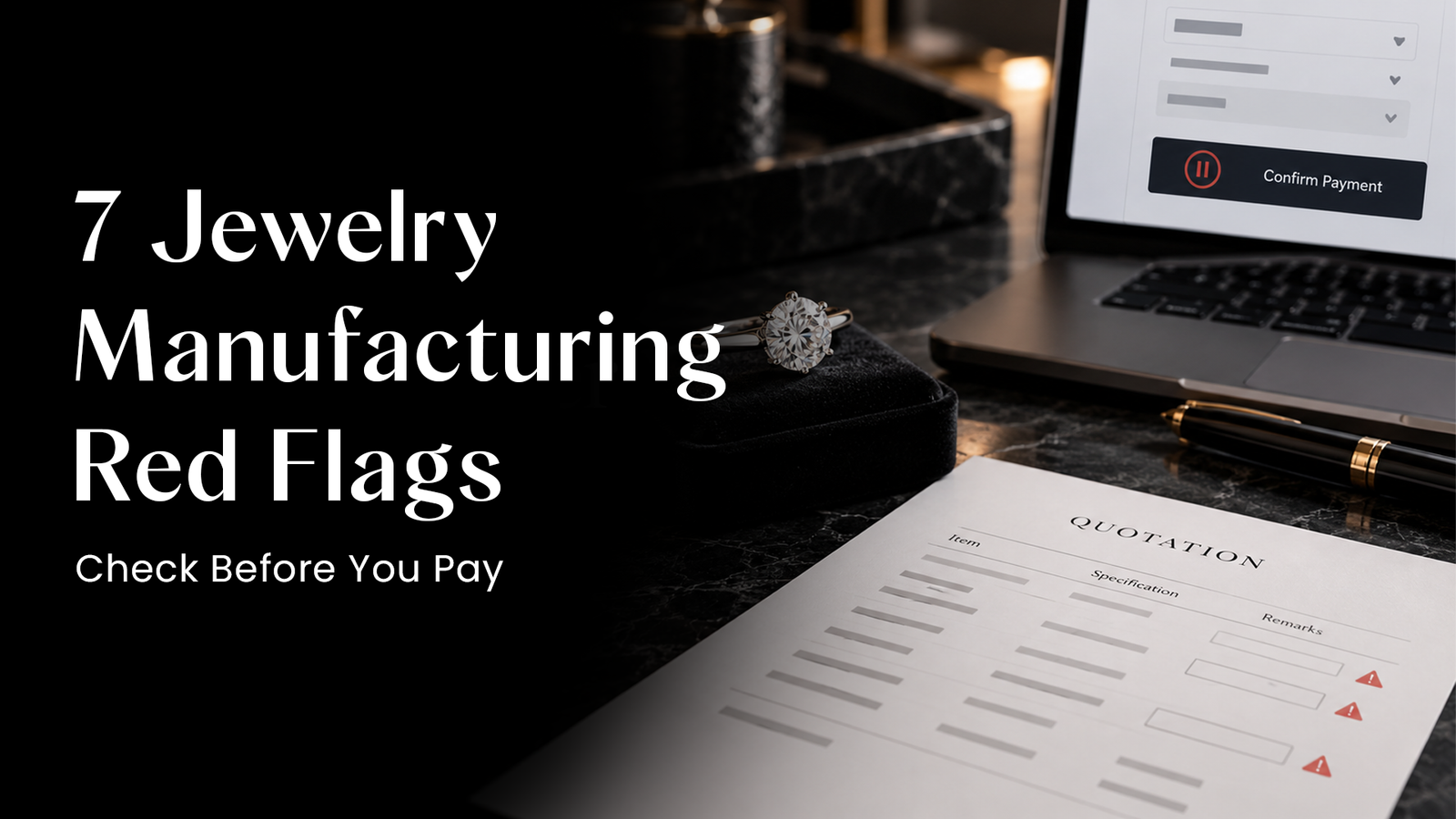
The quote was the best you had seen. You paid the advance, then replies slowed, dates slipped, and the pieces that finally arrived did not match the approved design. The damage rarely stops at the advance: missed launches, unsellable stock and customer refunds follow. Most of these losses show jewelry manufacturer red flags long before any money moves.
We are a Surat diamond jewelry manufacturer serving trade buyers in more than 15 countries, and this is the same checklist we encourage every new partner to use on us.
So how do you verify a jewelry manufacturer before paying? A polished website, a catalog and a low price prove little, and fake jewelry manufacturers rely on exactly that. Below are seven jewelry manufacturer warning signs, plus what a reliable jewelry manufacturer does instead.
Red Flag 1: A Trader Claims to Be a Factory
Manufacturers, traders, sourcing agents, and distributors all have a place, but some sellers hide who makes your order. That blurs responsibility for quality, communication, and delivery. Watch for unverifiable business details, shifting accounts of where production happens, generic factory photos, and no clear answer on who handles CAD, casting, setting, finishing, and inspection.
A genuine maker states its role openly, explains its workflow and offers proof such as a live video walkthrough or a third-party inspection. This is the core of jewelry manufacturer factory verification, and our guide to manufacturers versus jewelry suppliers explains why the difference matters.
Buyer action: Verify the legal business name, the invoicing entity, and who is responsible for the finished order.
Red Flag 2: A Final Quote Without CAD or Specifications
A firm jewelry manufacturing quotation based on a blurry reference image hides assumptions about metal weight, stone quality, size and finish, which often resurface as extra charges after payment. An early budget estimate is normal; treating it as a fixed commitment is not. Be wary of prices that change after the advance without explanation. A good partner uses jewelry manufacturing CAD design or detailed specifications, labels estimates versus confirmed quotes, and documents every assumption.
Buyer action: Ask for an itemized quote linked to a dated specification or an approved CAD version.
Red Flag 3: Vague Diamond Certification Claims
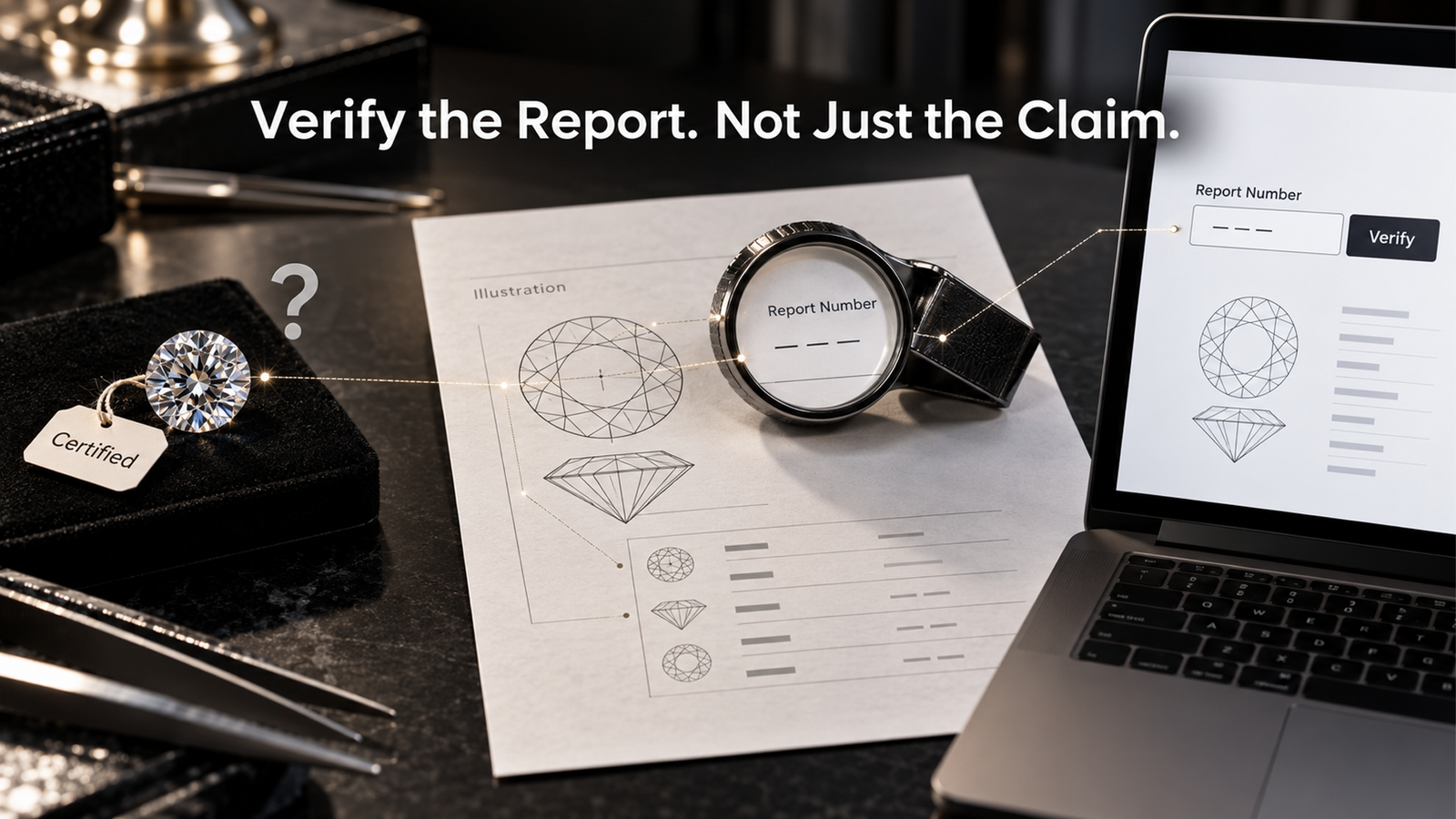
“Certified diamonds” and “international standards” mean nothing without detail. A grading report on a center stone does not certify every accent stone or the finished piece. Warning signs include no named lab, no report numbers, broad guarantees without measurable specifications, and evasive answers on natural versus lab-grown disclosure.
A trustworthy maker states which stones carry GIA or IGI reports, or HRD reports for natural diamonds, shares verifiable report numbers and puts quality criteria in writing. Grading has also changed for lab-grown stones: GIA now classifies them only as Premium or Standard, and HRD no longer grades loose lab-grown diamonds, so a recent HRD report on a loose lab-grown stone deserves a closer look.
Buyer action: Ask what exactly is certified, by which lab, and verify the report number on that lab’s website.
Red Flag 4: No Photo or Video Proof Before Dispatch
Releasing the balance without seeing your goods invites wrong designs, short quantities or stone mismatches. Be cautious of catalog images used instead of order-specific evidence, or pressure to pay before agreed checks. Real jewelry manufacturer quality control means agreed pre-dispatch photos or videos, shared inspection status and independent inspection where practical, although photos cannot replace physical testing. Our guide to jewelry manufacturing quality control covers what to agree upfront.
Buyer action: Write pre-dispatch evidence and final payment conditions into the purchase agreement.
Red Flag 5: No Sampling or Prototype Approval
A sample costs far less than a full collection with the wrong sizing or finish. Watch for pressure to approve bulk production from images alone, silence on sample fees, and no explanation of how approved specifications will be maintained. Proper jewelry manufacturing sample approval means a clear sampling option, stated charges and timelines, and recorded approvals.
Buyer action: Request a single-piece sample, or agree on a prototype or an inspected first article.
Red Flag 6: Unclear Making Charges and Hidden Costs
A low headline making charge can conceal metal, stone, CAD, tooling, setting, finishing, packaging or shipping costs. Common jewelry manufacturing hidden costs appear when the pricing basis (per piece or per gram), weight assumptions or exclusions are never defined. Insist on an itemized structure, stated assumptions, clear exclusions and documented reasons for any price change. International buyers should compare landed costs, not factory prices. Our guide to custom jewelry manufacturing cost shows what a complete price includes.
Buyer action: Get a written cost breakdown, payment schedule, quote validity period and change-order process.
Red Flag 7: No Named Contact or Communication Process
When a different person answers each message and nobody confirms your specifications, approvals get missed. Among wholesale jewelry supplier red flags, this one is easy to overlook because sales replies are fast. A dependable manufacturer assigns a named account manager, confirms changes in writing, and offers a clear escalation path.
Buyer action: Record the name, role, and contact details of the person responsible for your order.
Jewelry Supplier Verification Checklist Before You Pay the Advance
| Verification Point | Evidence to Request |
|---|---|
| Manufacturing identity | Company details and an explanation of the manufacturing role |
| Design and pricing accuracy | Approved specifications or a CAD-linked quote |
| Certification and quality claims | Named lab, report numbers and online verification |
| Pre-dispatch verification | Agreed inspection and photo or video process |
| Sample approval | Sample or an alternative validation arrangement |
| Transparent pricing | Written cost breakdown and payment terms |
| Accountable communication | Named contact and escalation procedure |
Payment Protection Steps for First-Time Jewelry Importers
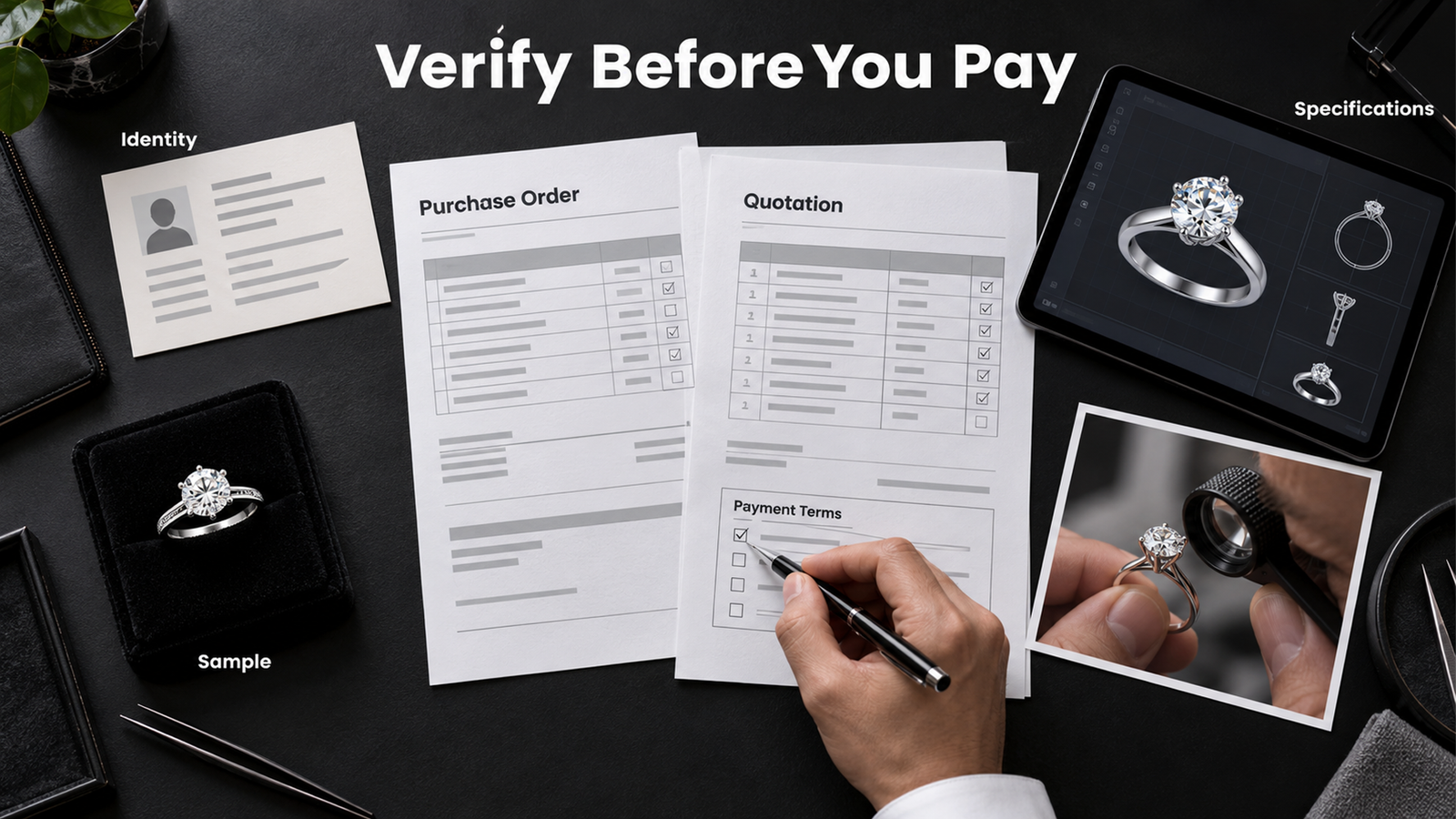
A jewelry manufacturing advance payment is normal in custom work. The risk lies in paying without verification and agreed safeguards. Good jewelry manufacturer due diligence includes:
- Matching the beneficiary bank account to the contracted legal entity
- Confirming the invoice, purchase order, specifications and payment milestones
- Never paying on the basis of messaging-app conversations alone
- Discussing staged payments where feasible
- Agreeing what happens if milestones are missed or goods do not conform
- Using independent inspection and professional advice for high-value orders
What a Reliable Jewelry Manufacturing Partnership Looks Like
Before payment, you see a clear identity, defined specifications and agreed jewelry manufacturer payment terms. During production, you get a named contact, recorded approvals and real milestones. Before dispatch, you receive an agreed inspection and order-specific evidence. No single check removes all risk, but together they make safe jewelry sourcing for retailers realistic.
Discuss Your Jewelry Manufacturing Requirements with D'vins Jewels
D’vins Jewels is a Surat-based manufacturer with 10 years in B2B. We manufacture both the jewelry and the natural and lab-grown diamonds in it, with monthly diamond production of around 2,000 carats, so you deal with the factory, not a middleman. We manufacture for trade buyers: jewelry retailers, wholesalers, distributors, online sellers and jewelry brands.
We offer a free CAD design within about 24 hours, transparent pricing with no hidden markups, videos of finished pieces before dispatch, and one dedicated relationship manager for your order. Key stones are available with GIA or IGI grading reports, and natural diamonds can also be graded by HRD. Ask us the same seven questions before you commit.
Share your jewelry category, references or CAD files, metal and diamond requirements, quantity, budget, delivery date and destination, along with any questions on samples, inspection and payment terms.
Conclusion: Protect Your Jewelry Business Before You Pay
Most jewelry manufacturer scams and costly mistakes start with unverified assumptions: hidden trading, unsupported quotes, vague certificates, no pre-dispatch proof, no samples, unclear charges and no accountable contact. Knowing how to avoid jewelry supplier scams means resolving each of these before your advance leaves your account.
Frequently Asked Questions
Unverifiable factory claims, quotes without specifications, vague certificates, no samples and unclear charges.
Check the legal details, ask about each production stage and request a live video walkthrough.
It can be, once identity, specifications, milestones and bank details are verified in writing.
A final custom quote should be linked to a CAD design or detailed specifications.
Usually yes, or an agreed prototype or inspected first article.
Company details, an itemized quote, approved specifications, grading reports with verifiable numbers and payment terms.
Approve samples, set milestones, agree on pre-dispatch checks and link the final payment to inspection.